
Searching the Earle Court Docket
Open Search ARCourts and filter for the Earle District Court department. A full case number works best. The participant search gives you first, middle, and last-name fields, and the advanced tools narrow things by court, case type, and filing date. Keep the search broad, though, so a name variant does not slip past you.
- Read the court and appearance line on the Earle citation or notice.
- Select the Earle department in Search ARCourts.
- Enter the case number, or search the participant name with few filters.
- Review the matching Earle Case Events and Docket Entries.
- Call the Earle clerk to confirm the active setting and required response.
No Earle result? Strip away the extra filters and double-check the case number. Then call the department. Sealed, juvenile, brand-new, or older records may simply not be online.
Once the Earle case opens, read the header before the individual lines. Participants lists who holds each role, and Case Events records what happened. Docket Entries show the filing ledger. Criminal cases may add Offenses and Sentences. A document icon can sit at the right of a docket line, though coverage varies. When an Earle entry has no image, take it to the clerk. Ask about a copy.
Earle Court Docket Contact Routes
The Earle court site sits at 1004 Second Street. Mail for the clerk goes to PO Box 213. Phone and fax are the fastest routes for a direct answer, especially when Search ARCourts shows no public entry or the citation payment method is unclear.
Earle District Court
1004 Second Street
Earle, AR 72331
Clerk mail: PO Box 213
Earle, AR 72331
870-792-7205
Fax: 870-792-7318
Never mail a payment just because the Earle clerk has a PO box. First ask whether the court takes payment by mail. Confirm what payee name is current. Ask which identifying details must ride along with it. Remember that the Earle citation deadline keeps running during that check.
For a record request, say exactly what you need. Inspection, a plain copy, or a certified copy. Include the Earle case number, court, filing date, and the specific item when you know it. The department publishes no form, identity rule, processing time, or fee schedule. Ask for those terms before you send payment or a self-addressed envelope.
Earle Municipal Court Basics
Earle is not a stand-alone general-jurisdiction municipal court. It is a department of Crittenden County State District Court. Its docket handles traffic and ordinance cases. It also covers misdemeanors, preliminary felony proceedings, small claims, and limited civil matters under District Court authority. District Judge Tyler Ginn serves the six departments. Check the current Arkansas district-court directory whenever the judge, clerk, or department label matters. Old city pages can carry stale labels after a state structure or assignment change. For routing, trust the directory and the Earle citation over any undated third-party listing.
The case type offers another check on court level. A local traffic charge or misdemeanor fits the District docket. A felony may begin with an early Earle proceeding. The prosecution itself belongs in Circuit Court. Broader civil litigation, domestic relations, juvenile matters, and appeals also sit at the Circuit level. Make the court name and the case type agree. Only then treat the result as the right Earle record.
Earle Twice-Monthly Court Docket
The administrative plan schedules the Earle traffic and criminal docket for the second and fourth Tuesdays at 9:00 a.m. That cadence sets the normal rhythm of local court work. It does not promise that any one case stays on a given Tuesday.
A later order, reset, holiday change, or special setting can override the plan. Compare your Earle paper notice with the newest Case Events and Docket Entries. Then have the clerk confirm the date, time, and location. Do that before you show up.
The twice-monthly rhythm also invites misreadings. After a continuance, the earlier Tuesday still sits in the Earle chronology. Start at the newest entry and work backward until the change is clear. Then read the older lines for context. No regular session date can replace an individual order. Such an order may set a different time or place.
Court Dates and Settings in Earle
An Earle setting may appear as an event, a docket line, or a linked notice. Filing Date marks when the item reached the court record. That date can differ from the hearing date. The hearing date sits inside the notice. Read past the first date you see. A later reset leaves the earlier Earle entry in view.
| Date | The current Earle appearance date after later changes are reviewed. |
|---|---|
| Time | The stated session or individual time, not the filing timestamp. |
| Location | 1004 Second Street or another place ordered by the court. |
| Setting Type | Arraignment, pretrial, plea, trial, sentencing, status, or review. |
| Case Number | The most reliable link between the Earle paper and online entry. |
The court posts no standalone Earle calendar. Search ARCourts plus clerk confirmation is the way to verify a setting.
Earle Current-Setting Docket Check
Two Earle dates on the record? Do not assume the second-and-fourth-Tuesday schedule settles the question. Scan the chronology for a continuance, reset, amended notice, cancellation, or new order. The latest controlling entry usually explains the change, but the clerk should confirm any date you must attend.
Missed or unclear Earle setting: call 870-792-7205 at once, supply the case number, and ask what the current court record requires.
A no-result portal search never extends an Earle deadline. If the office cannot verify your date by phone, ask how to inspect the current file or get the filed setting notice.
Traffic Tickets in Earle
Earle does not appear on the list of courts. Those courts take part in Arkansas Online Court Payment. So skip any promise of eTraffic lookup or paying an Earle ticket online. Keep the citation handy. When it covers an Earle record, Search ARCourts is the place to check, and a call to the department confirms the approved response or payment channel for that ticket.
| Earle task | Verified channel | Caution |
|---|---|---|
| Check case events | Search ARCourts | Coverage and document links vary |
| Confirm appearance | Earle clerk by phone | Use the case or citation number |
| Ask about payment | Earle clerk or citation | No confirmed eTraffic participation |
| Request a copy | Earle department | Fee and turnaround were not published |
Never assume a mandatory appearance can be settled by mailing in money. The Earle court's own instruction controls.
Arkansas Online Court Payment ties online payment to a guilty or no-contest disposition. Paying through the portal waives appearance and trial on an eligible charge. Earle participation is not confirmed, so those terms do not create an Earle option. They do show one thing. Payment is never a neutral search step. Ask the Earle court about both eligibility and the plea effect.
Earle Citation Routing Key
The court name and number printed on an Earle citation tell you where the charge went. They point to the department that received it and the docket to check. A name alone can show up in more than one case. A complete number narrows the match fast.
- Citation number
- The identifier on the Earle ticket; it may differ from the later case number.
- Case number
- The court-assigned identifier linking Earle events and filings.
- Appearance date
- The date printed or later ordered by the court.
- Mandatory appearance
- A matter that cannot be assumed eligible for remote payment.
Read all three items before you send money or miss work. If the Earle citation and the online record disagree, the clerk can match the numbers and confirm the current instruction.
Where Earle Cases Go
Earle District Court keeps the limited-jurisdiction record. A felony may begin with a preliminary Earle appearance, but the prosecution moves forward in Crittenden County Circuit Court. General civil, domestic-relations, juvenile, and appellate matters sit at the Circuit level too. District Court appeals also go up to Circuit Court.
Docket flow: Earle District Court › Crittenden County Circuit Court › Arkansas Court of Appeals or Arkansas Supreme Court
An Earle matter may move past the local department. When it does, the countywide Crittenden County case lookup explains the statewide search fields. Keep the Earle case number and any receiving Circuit number. A transfer or appeal may create a new cross-reference.
The two files do not merge. The Earle docket preserves the local proceedings and disposition that led to the move. The Circuit docket records the later filings, settings, orders, and appeal activity. Search both numbers to reconstruct the history. Request official documents from the clerk that holds each part.
Earle State and Federal Dockets
Search ARCourts covers Arkansas state cases only. Federal litigation is not there. PACER is the federal judiciary's account-based system. It handles party and case searches, docket reports, and available documents. Crittenden County sits in the Eastern District of Arkansas, so a federal trial matter never lands with the Earle clerk.
The official PACER service lays out the federal access route.
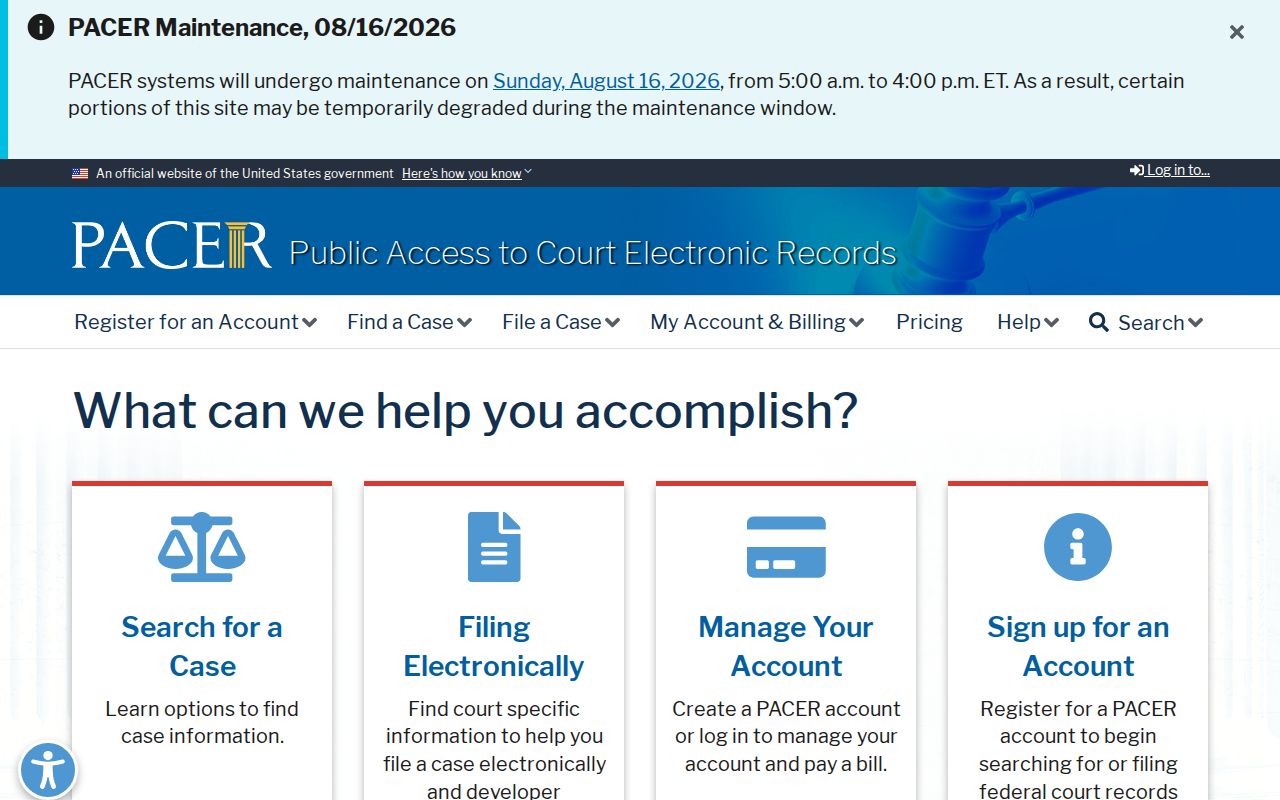
This is where an Earle state docket ends and a federal docket begins.
The PACER Case Locator searches federal courts nationwide.
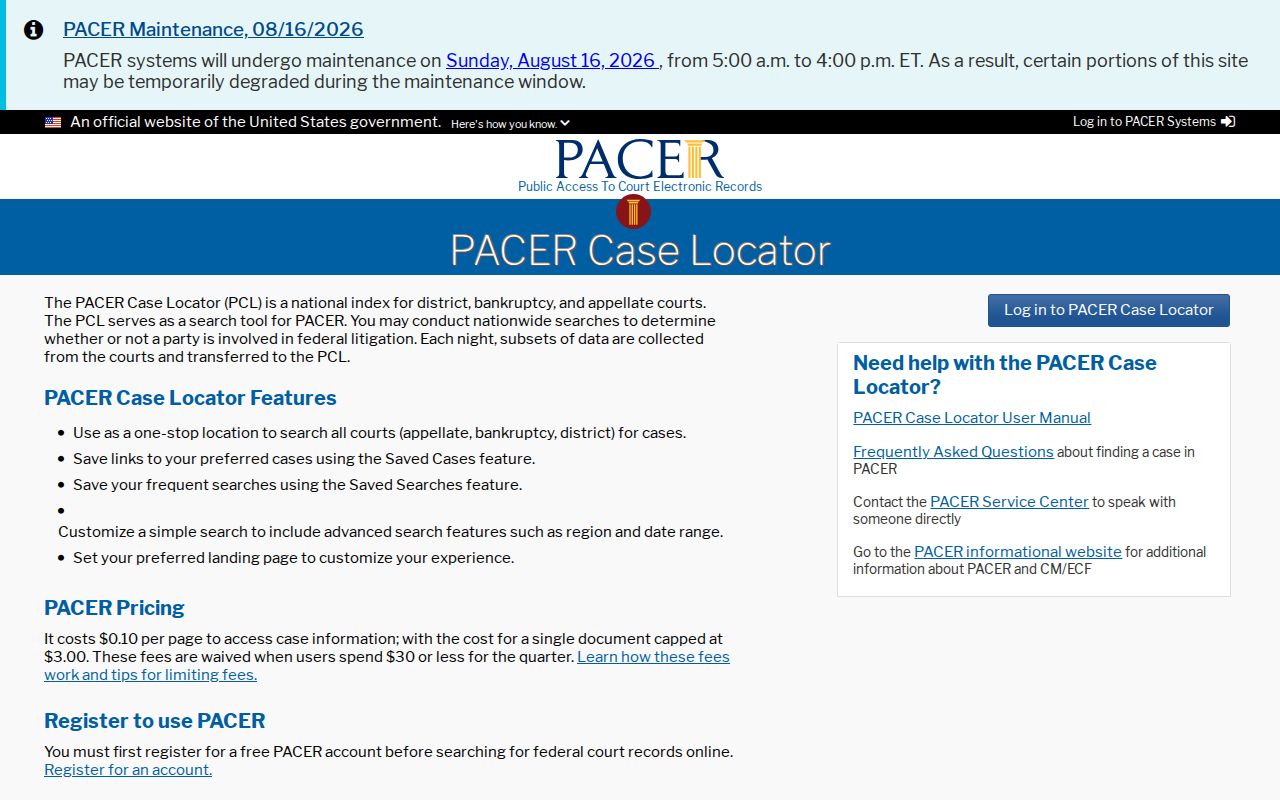
The locator only helps when the Earle-related dispute is federal. Local citations and District Court cases stay with Earle and Search ARCourts.
PACER generally charges for federal pages under its published policy. Public Search ARCourts docket information is free. Neither source supplies a certified Earle District Court copy. That copy comes from the local clerk. Keeping the systems separate helps. It stops a federal account or fee from being mistaken for an Earle access rule.
Earle Court Record Access Rules
Arkansas Supreme Court Administrative Order 19 governs court-record access and exclusions. It opens eligible Earle court information to the public. Sealed material, confidential case types, personal identifiers, and other restricted data stay protected.
Key rules:
Search ARCourts is an unofficial public service, not legal notice or a certified Earle record.
Ark. Code Ann. §9-27-309 restricts juvenile records in specified circumstances.
An Earle docket entry can remain visible even when its document or exhibit is restricted.
Ask the Earle clerk for inspection, a plain copy, or a certified copy. Give the case number, filing date, and exact document title. The clerk publishes no official Earle copy fee, request form, or turnaround, so request a current quote.
Earle Docket to Circuit Appeal
An appeal moves the dispute to Circuit Court under the governing rules. It does not erase the Earle District Court history. The local docket remains the source for the starting filings and disposition. The receiving Circuit record shows the appeal activity.
An Earle entry may refer to an appeal, transfer, or new case number. Search both courts in that situation. The Circuit Clerk at 100 Court Square in Marion maintains the Circuit records. That covers civil, criminal, domestic-relations, juvenile, and appeal files. Search ARCourts is still its public search path. Official copies come from that clerk.
Note: An Earle appeal and the original District Court case can carry different numbers. Preserve both before requesting records.
Historic Earle material may fall outside the public portal's coverage. The court publishes no official digitization start date. For an older case, give the clerk the case style, approximate year, case category, and any known number. Ask whether the record is on paper or held in another archive format. Then request only the docket sheet or exact filing you need.